
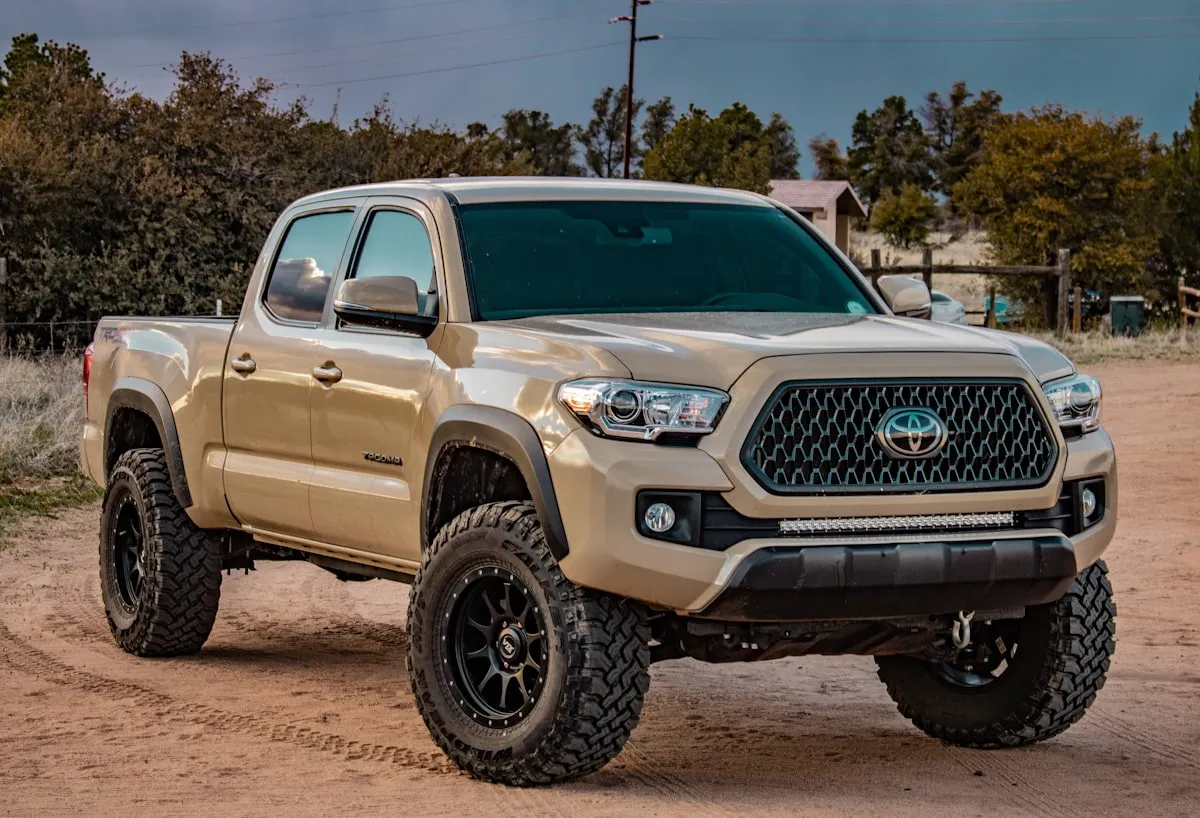
Before buying a used truck for towing, verify that its exact configuration can carry your passengers, cargo and trailer load. Then arrange an independent inspection of the hitch, frame, brakes and drivetrain, supported by service records. A receiver hitch or a seller’s claim that it “tows great” cannot establish either capacity or mechanical condition.
Bring the trailer’s loaded weight and equipment details to the inspection. That gives the mechanic a specific job to assess and gives you a reason to reject a truck that cannot meet it.
What to request before visiting
Ask for the VIN, photos of the door-jamb weight labels, the original equipment information and maintenance invoices. Request details of the trailers the owner pulled, how often they towed, and any overheating, transmission or hitch repairs. Treat those answers as a starting point to check against records.
If you are still choosing a vehicle type, our truck-versus-SUV guide explains the broader tradeoffs. This checklist focuses on the condition of a particular used truck.
| Check | What to resolve before buying |
|---|---|
| Tow ratings | Confirm this truck’s configuration suits your planned load |
| Hitch and frame | Have the shop assess damage, corrosion and repairs |
| Service records | Match invoices to the correct maintenance schedule |
| Brakes and tires | Get measurements and price any needed repairs |
| Drivetrain | Have leaks, noises or shifting symptoms diagnosed |
| Recalls | Check the VIN and confirm any outstanding remedy |
Verify the truck’s ratings before judging the hardware
Use the manufacturer’s information for the truck’s year, engine, transmission, drivetrain and other required configuration details. Compare the planned loaded trailer weight with the applicable trailer rating, and check the truck’s payload, gross vehicle weight rating, axle ratings and combined-weight limit. Account for passengers, luggage, installed accessories and the trailer’s load on the truck.
The receiver, ball mount and other towing components also have limits. CURT’s towing-capacity guide explains these terms and the need to respect the lowest-rated component. A high-rated replacement hitch does not authorize exceeding the vehicle’s limits.
Write down what will actually travel with you; our road-trip cargo guide can help with that inventory. Leave the final capacity check tied to the vehicle labels and manufacturer instructions.
Inspect the hitch and frame without guessing its history
Ask the mechanic to inspect the receiver, mounting points, surrounding frame and trailer wiring. Record cracked or bent parts, loose hardware, substantial corrosion and repairs that need further assessment. For an aftermarket hitch, identify the product and compare its installation with its instructions.
Receiver scuffs, surface rust or repaired wiring are reasons to look more closely. They do not tell you how heavy a trailer was, how often it was used, or whether the truck was overloaded. Likewise, a clean receiver cannot prove the truck never towed.
Ask the inspector to check the trailer connection and brake-controller operation where equipped, and to state what testing was possible. A plug or controller visible in a listing is not a completed functional check.
Match maintenance to the exact truck
Compare invoices with the correct owner’s manual, including any provisions for towing, repeated short trips, off-road use or other operating conditions that apply. Do not apply a universal transmission-fluid interval to every used pickup.
For example, the 2022 F-150 manual’s special-operating-conditions section distinguishes primary use under those conditions from occasional use. Ford also directs owners to the manual supplied with their vehicle as the primary reference. That example is a reason to find the applicable schedule, not a service prescription for every F-150.
Have the mechanic establish which cooling equipment belongs on this configuration and inspect its condition. The absence of a separate visible cooler alone does not establish past overheating. Leave fluid-level checks, fluid selection and service procedures to someone using the correct instructions; color alone is not a diagnosis.
Missing invoices leave a gap. Ask what inspection or maintenance is justified by the schedule and findings before assuming the truck needs a particular flush or additive.
Get measurements and diagnoses in writing
Request brake measurements, tire-condition findings, suspension checks and inspection of drivetrain leaks. Our tire-pressure guide covers pressure checks, but the purchase inspection should also assess whether the installed tires suit this truck.
During a permitted test drive, note shifting behavior, warning messages, braking vibration and unusual noises. Give those observations to the mechanic. Brake wear does not establish heavy-towing history, and a whine or clunk by itself cannot identify the failed part.
Ask the shop to separate confirmed repairs from further diagnostic work and routine maintenance. Get the inspection scope and price beforehand, including what could not be inspected. Our pre-purchase inspection guide goes into more detail on choosing and using that report.
Check recalls and decide whether to proceed
Run the VIN through NHTSA’s recall lookup. It reports unrepaired safety recalls within its coverage; it does not certify the truck’s overall mechanical condition. Confirm any open recall and remedy with the manufacturer or dealer.
The FTC recommends an independent inspection even for dealer-certified vehicles, and explains that a vehicle-history report cannot replace one. Request a written report identifying the truck and estimating necessary repairs. If a dealer refuses an independent inspection, the FTC suggests considering another dealer.
Proceed when the ratings fit your intended load and the inspection gives you a clear basis for the purchase. Pause when capacity is unresolved, a structural concern needs assessment, or drivetrain symptoms remain undiagnosed. For the rest of the transaction, see our used-car buying checklist.
Editorial note: Updated September 15, 2026, using the manufacturer and consumer references linked above. This is a researched inspection-planning guide; we have not inspected the truck pictured or any vehicle offered for sale.