
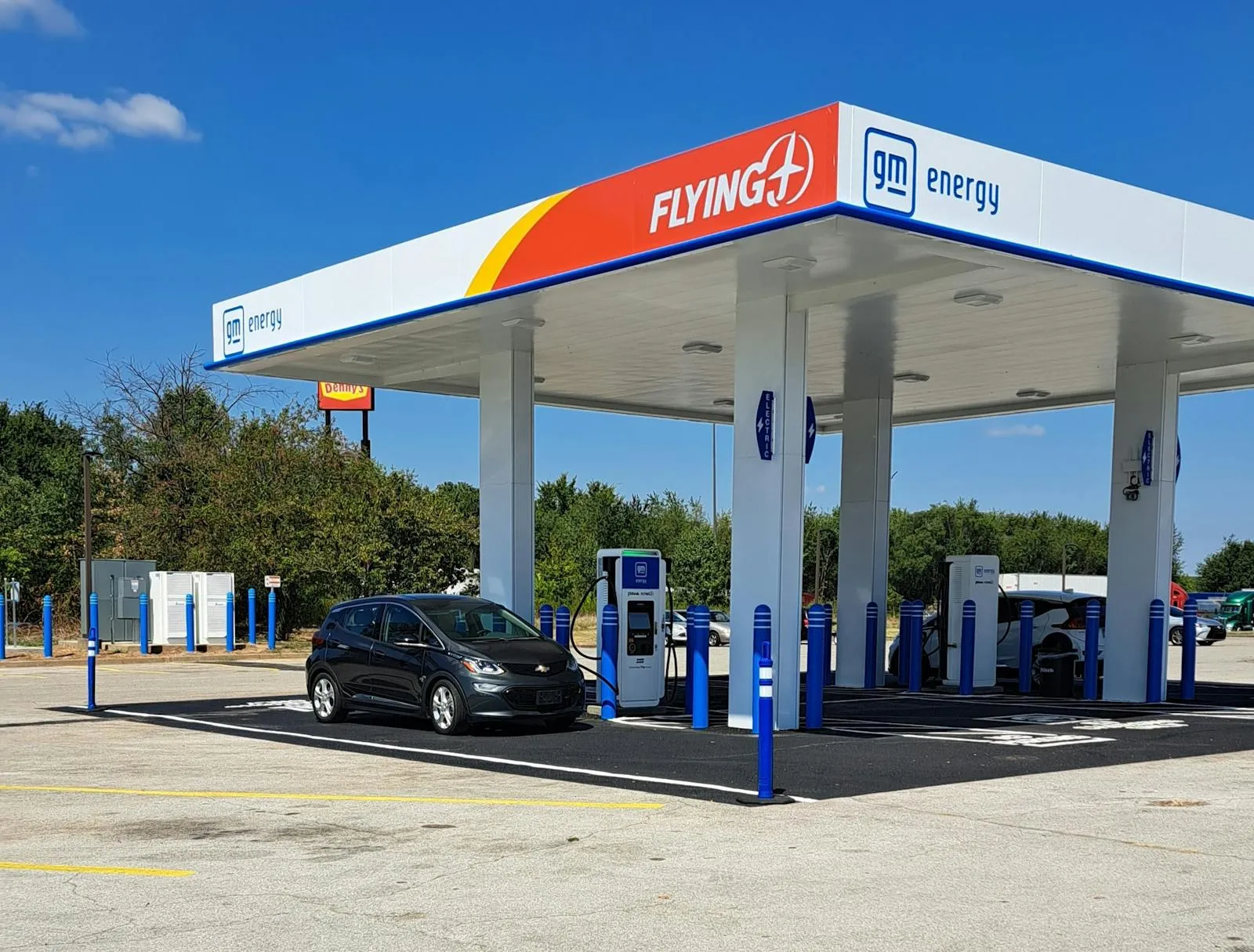
The charging photo above is illustrative; it does not show a winter test or a vehicle evaluated for this guide.
Departure heat and charging preparation do different jobs
A scheduled departure or climate setting can warm the cabin before you leave. Depending on the vehicle, it may also warm the battery. Doing this while plugged in can draw on the charging supply, but a warm cabin alone does not tell you whether the battery is ready for a DC fast charger later in the trip.
En-route battery conditioning prepares the high-voltage battery for a charging stop. In supported cars, the navigation system can use the selected charger and estimated arrival time to manage battery temperature. Check your owner’s manual for your model and software: a phone map directing you to a street address may not trigger the car’s charging preparation.
How three systems approach a charging stop
| Vehicle and source | How to start | Conditions to remember |
|---|---|---|
| Equipped Ford Mustang Mach-E or F-150 Lightning | With an active Connected Navigation plan, select a DC fast charger from the car’s charging database. | Ford says the car warms or cools the battery as needed approximately 20 minutes before arrival. A street address alone does not trigger the feature. |
| 2026 Hyundai IONIQ 5 N, with battery heater | Select a DC charging station as a navigation destination or waypoint, or use the Battery Conditioning control manually. | Conditioning will not run when the battery is already suitable or its charge is low. Heating uses energy and can reduce driving range; reaching the desired temperature takes time. |
| Tesla Model Y, with Trip Planner available | Use Trip Planner to navigate to a Tesla charging location. | Tesla recommends navigating for at least 30–45 minutes before arrival. For a shorter drive, it suggests considering battery preconditioning before leaving. |
These examples come from Ford’s Connected Navigation FAQ, the 2026 IONIQ 5 N owner’s manual, and the Model Y cold-weather guide. They are not interchangeable instructions for every model from those brands.
On the Hyundai, the manual control is in the Electric Vehicle screen under Battery Conditioning. If the display says the battery is suitable, further conditioning will not occur. Tesla says the Model Y can also warm its battery as needed when you use the climate controls before departure.
Plan the stop before leaving
Choose a compatible DC fast charger and a backup, as covered in our EV road-trip planning guide, then enter the intended stop using the method your vehicle supports. Leave enough charge to reach the stop with a useful reserve, especially in winter: battery heating consumes energy, and a low charge can prevent conditioning on some vehicles. If you change stations, update the destination in the car’s navigation where applicable.
A short drive may not give the battery enough time to reach its target temperature. If the car offers a departure or manual battery-conditioning setting, consult its instructions before using it. Do not assume a missing indicator means the feature is broken: the battery may already be within the required range, or the vehicle may have another operating limit.
At the charger, the displayed power can still vary with the battery’s state of charge, vehicle limits and the station. Allow extra time in cold weather rather than planning around the charger’s maximum advertised power.